Wind Direction Explained: How to Use a Weather Vane and Anemometer
Two days can show the same temperature on the thermometer and still feel like different seasons, and the usual reason is the wind. Air arriving off the Atlantic behaves nothing like air from the Arctic, so knowing which one you have changes how you dress, what you plan, and whether the washing goes out. Wind is also one of the few parts of the weather you can measure properly at home, with a vane, an anemometer and a little thought about where you put them.
What a weather vane is really telling you
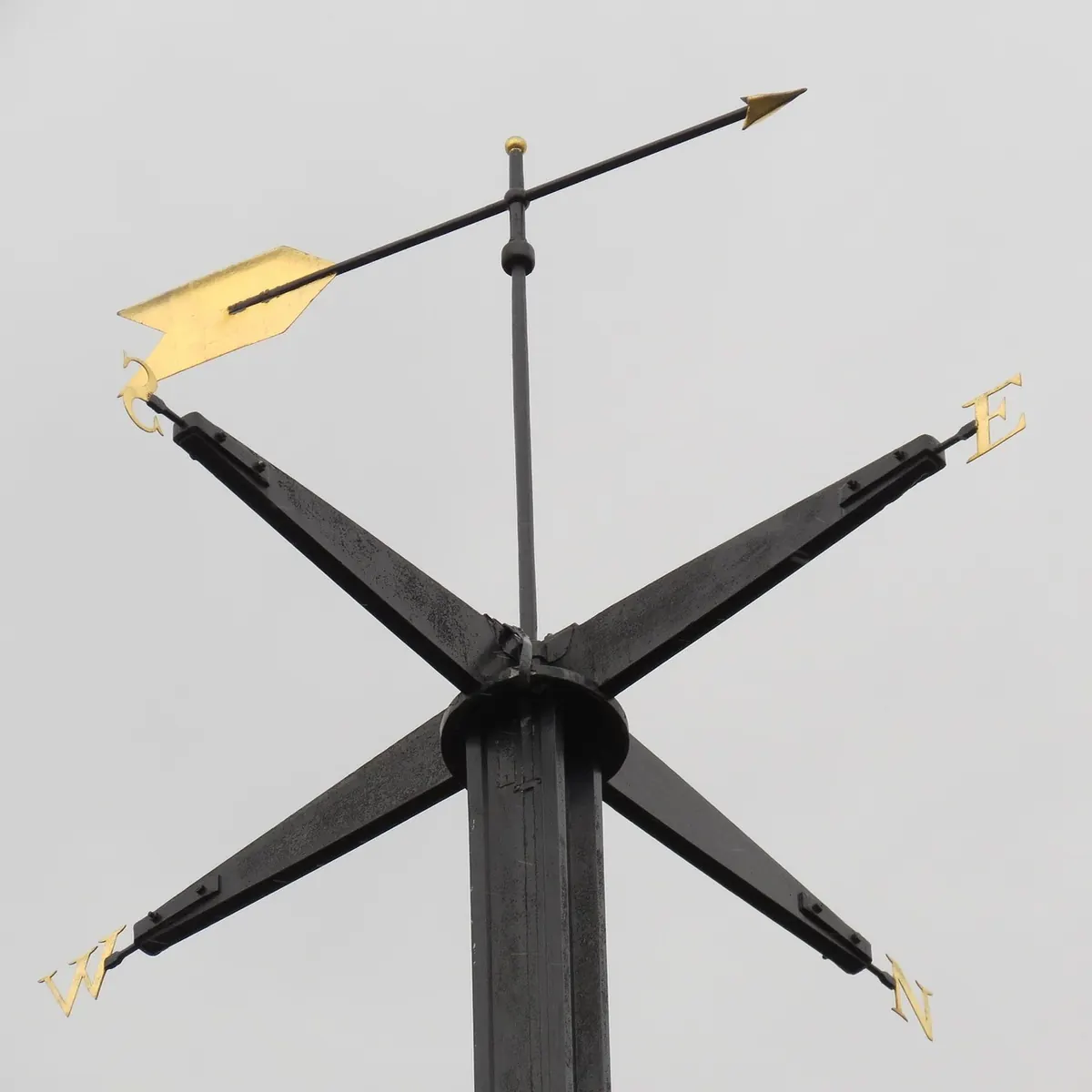
A vane works on a simple principle: the tail has more surface area than the pointer, so the wind pushes the tail downwind and swings the point round to face into the breeze. That is exactly how wind direction is reported. Meteorologists name a wind after the direction it blows from, not towards. A vane pointing south-west means a south-westerly: air travelling from the south-west, across your garden, heading north-east.
That convention catches people out, and decorative vanes make it worse, since on some it is genuinely hard to tell which end indicates direction. Check yours against a landmark whose bearing you know, or a compass held well clear of metal. Directions are usually given in degrees from true north, running clockwise: north 0 or 360, east 90, south 180, west 270. Day to day, 16 compass points are plenty. Without an instrument, stand with your back to the wind: in the northern hemisphere the lower pressure sits on your left.
Siting a vane so the reading means something
Official observations are taken ten metres above open ground. In a garden you will be measuring something slower and far more disturbed than that, which is fine as long as you understand it and keep the setup consistent.
Put the vane as high as you safely can: a mast on a gable end or a bracket above the roof line beats a pole at the end of the lawn every time. Buildings and trees shed eddies that can send a vane swinging through 180 degrees for a few seconds at a stretch, so as a rule of thumb keep the instrument at least as far from a tall obstacle as that obstacle is tall. A vane jammed between a fence and a sycamore will tell you about the sycamore, not the weather. Last job: align the north marker properly, allowing for the difference between compass north and true north, which varies across the UK and shifts slowly over time.
Choosing and using an anemometer
Cup anemometers are the workhorses: three cups on a spindle, robust and reasonably accurate while the bearings are sound. Propeller units that combine a vane and a rotor give direction and speed from one instrument, which keeps a mast tidy. Sonic anemometers have no moving parts and are excellent, but you pay for that. Handhelds are for spot checks on a walk or at the coast, not for logging a week of data on a wet roof.
Units are the fastest route to nonsense in your records. UK forecasts use miles per hour, shipping bulletins use knots, and meteorological reports often use metres per second. Pick one, write it at the top of every page, and stay with it.
Then decide what you are recording. Ten-minute averages describe settled conditions; gusts are brief peaks of a few seconds and are usually the number that matters when a fence panel goes. Mount the anemometer above the vane on the same mast, so the cups are not sitting in the vane's shadow, and check now and then that they still turn in the lightest breeze. Cups that stick or squeak usually mean worn bearings or grit.
Recording wind: a routine that takes two minutes
- Take readings at the same times each day, morning and evening if you can manage it.
- Note the direction as a compass point, and in degrees if you have them.
- Record the mean speed and the strongest gust since your last entry.
- Describe the character of the wind: steady, gusty, squally, fitful and variable.
- Add a line on what you can see and feel, such as cloud, rain, or how the wind sounds in the trees.
- At the end of each week, tally how often each direction appeared. A month of that becomes a picture of your local wind.
What each wind direction means for UK weather
Direction tells you where the air has travelled from, and therefore what it has picked up on the way.
- South-westerly: the UK's default. Mild, moist Atlantic air, often grey with drizzle or hill rain.
- Westerly: similar but fresher, with bright spells and blustery showers following each front.
- North-westerly: cooler polar air, sharp showers and good visibility between them. Western coasts and hills catch the worst.
- Northerly: cold and bracing. Often bright and dry inland, with wintry showers reaching northern and eastern coasts.
- North-easterly: raw and penetrating, frequently grey, and the direction that brings snow to eastern counties in winter and early spring.
- Easterly: air off the Continent. Cold and dry in winter, warm and often sunny in summer, capable of heat and thunderstorms.
- South-easterly: warm and humid, often thundery in summer; milder than an easterly in winter but often dull.
- Southerly: warm, humid and hazy, with a muggy feel and a habit of ending in thunderstorms.
Season changes everything, so treat those as tendencies rather than rules. Local geography matters just as much: a sea breeze can override the background wind on a still summer afternoon, turning a light northerly on the coast into a stiff onshore southerly by mid-afternoon, and valleys funnel the flow in ways no map shows.
Backing and veering
A wind shifting clockwise, say from south to south-west to west, is veering. It usually happens as a cold front passes: the rain clears, the air freshens, and showers follow. A wind shifting anticlockwise, from south-west to south to south-east, is backing, and it often means a warm front or a deepening low is approaching with more rain behind it. Writing "veering" or "backing" beside the direction turns a list of readings into something you can actually forecast with.
Getting started this week
You do not need much. A simple vane and a mid-range cup anemometer, mounted as high and as clear of obstacles as you can safely manage, will teach you more than expensive kit in a bad spot. Log at the same times for a week and patterns appear quickly: the way the wind backs before rain and veers as it clears, the sea breeze that arrives at teatime, the difference a shift to the north-east makes to how cold the same temperature feels.
Keep the equipment where you can see it from a window, and it becomes a habit rather than a chore. If you are working near a roof or climbing a ladder to fit a mast, take the usual precautions or ask someone experienced to help. A comparison with your nearest official station now and then is worthwhile too. Exposures differ, so expect gaps, but a persistent, unexplained difference usually means something needs adjusting.
Photo: MPMPix / Pixabay