Seasonal Shift: How to Adapt Your Weather Journal for Winter
Winter rearranges the working day of anyone who keeps a weather journal. The slot you set aside for morning readings now falls in half-light, the thermometer spends more of its time below zero than above, and the best weather — the first hard frost, the sudden settling of snow — tends to arrive and vanish between your usual observation times. None of that is a problem. It simply means the journal needs a different shape for a few months.
Reset Your Observation Times
In summer, one reading around 08:00 or 09:00 catches most of what matters. In winter the overnight minimum usually arrives shortly before dawn, and dawn itself shifts by well over an hour between October and January. Chasing the light is a recipe for inconsistent records, so keep the number of fixed points small.
Two anchors, not one
Most observers keep 09:00 as the fixed daily reading, because it is comparable right through the year and falls after the coldest part of the night. Add a second, more flexible reading at first light. Step outside as soon as you can read the thermometer without a torch, note the minimum, then reset it. If you reset at wildly different times each morning, the figure you record covers a different window every day — so write the time beside it.
The dusk check
A short evening reading takes two minutes and earns its place. Between about 16:00 and 17:00 in December, note the air temperature and whether it is already falling, the wind direction, and whether frost is beginning to form on car roofs or the garden gate. This is when freezing fog and the first icy patches on paths announce themselves, and it is also the reading that shows how quickly heat drains away once the sun has gone.
Recording Frost Properly
“Frost” on its own is too blunt for a journal. A clear, still night, a damp night with a light breeze and a spell of freezing fog all leave very different marks on the ground, and the distinctions are worth keeping.
- Air frost — the temperature in your screen or sheltered spot falls below 0°C.
- Ground frost — grass, paving or a windscreen drops below freezing while the air a metre up stays above it.
- Hoar frost — white, feathery crystals deposited on cold surfaces on clear, calm nights.
- Rime — rougher, grainier ice, often built up on the windward side of fences and branches during freezing fog.
Alongside which type you saw, note where it formed (lawn, path, roof, exposed hedge), how thick it looked, and the time it cleared. A thermometer lying on the grass tells you more about ground frost than one hanging at head height. If your garden sits in a dip, remember that cold air drains downhill, so the bottom of the slope will freeze while the patio stays clear — worth a note in the margin, because it explains odd readings for years to come.
Snow: Depth, Type and Timing
Measure snow on a flat board, a cleared paving slab or a table top — never on grass or a wall. Read to the nearest centimetre and always in the same spot. Take the daily measurement at a consistent time, because snow settles and compacts: the same fall will read deeper at 07:00 than at 11:00.
What to write down for each fall
- The time it started and the time it stopped.
- Fresh depth on the board, recorded each morning.
- Character: dry, squeaky powder; heavy wet flakes; small hard pellets; fine grains.
- Wind behaviour — drifting, blowing about, or falling straight down.
- Any changeover: rain to sleet to snow, with rough times.
- When the lying snow begins to thaw, and how much is left by evening.
Keep the total lying depth separate from the fresh depth. A week of daily one-centimetre falls can leave fifteen centimetres on the ground, and only a running total shows that.
Light, Cloud and the Low Sun
Daylight is the quiet variable of a winter journal. Recording sunrise and sunset times, or simply noting first light and the moment the street lamps come on, builds a clear picture of how the season closes in. Through midwinter, most of the UK sees roughly seven to eight hours of daylight, and rather less in the far north.
The sun’s low angle changes what you can see. Shadows stretch across the garden all day, sunshine feels weak even on a bright afternoon, and cloud cover is trickier to judge because the sky is often bright grey rather than blue. Estimate cloud in oktas as usual and note any flat, featureless overcast. And when snow is lying, watch how it changes your temperature record: a bright snow-covered day can keep the maximum lower than a bare-ground day with the same sunshine.
Keeping the Kit Working in Cold and Damp
The weather is not the only thing that misbehaves in January. Ballpoint pens stiffen, notebook pages curl, and phone batteries empty themselves in a coat pocket.
- Carry a pencil or a pen that copes with cold — it will not fail at minus three.
- Keep the notebook in a plastic bag, and let it reach room temperature before opening it indoors, or condensation will damp the pages.
- Mount the thermometer clear of walls, which radiate stored heat, and away from paths where feet pass.
- Keep a paper backup of readings if you log on a phone, and carry the phone in an inside pocket.
- A small head torch makes the dusk check far easier than holding a phone light and a notebook at once.
A Short Winter Checklist
If you change nothing else, change these. Fix 09:00 as your daily reading and add a first-light minimum. Note the time of every reset and every observation. Measure snow in one place, at one time. Write down frost type, not just frost. Record first light and last light for a week each month. And when the cold spell ends, spend ten minutes reading back through the pages — the pattern of frost hollows, drifting snow and thaw times will already be telling you something about your own patch of ground.
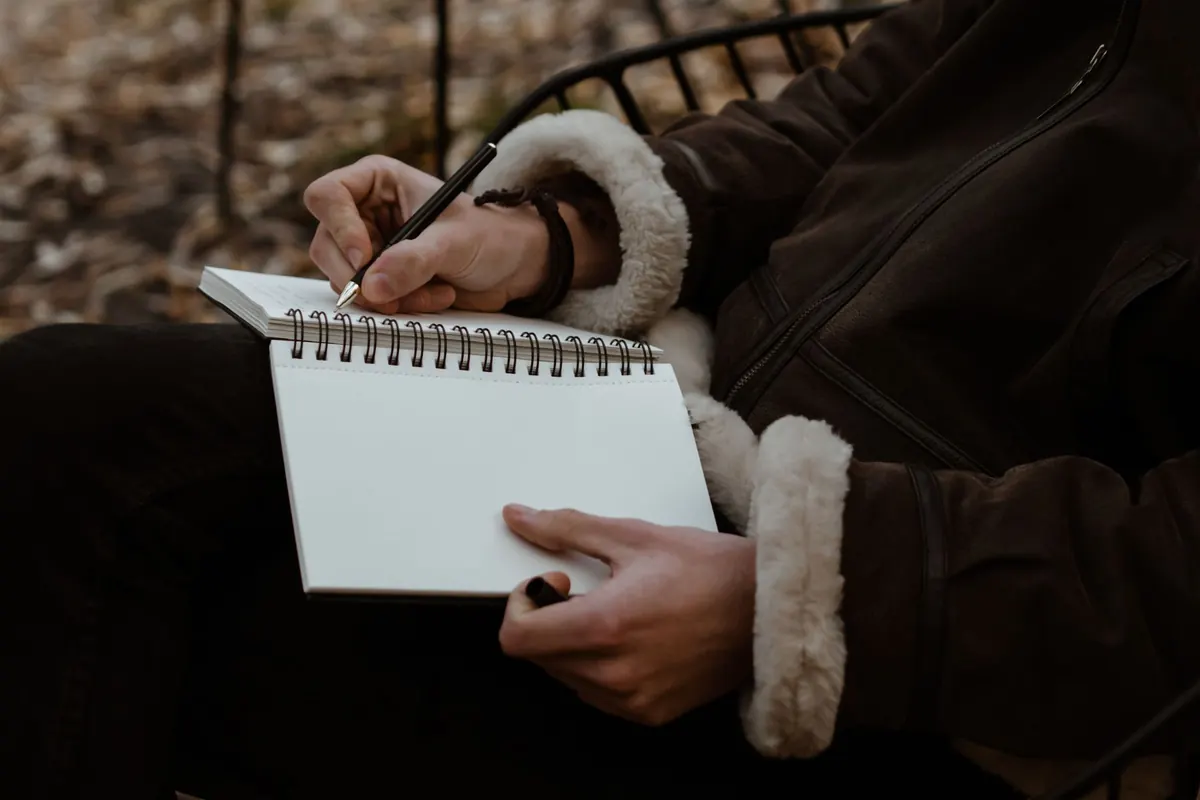
Photo: Polina ⠀ / Pexels